
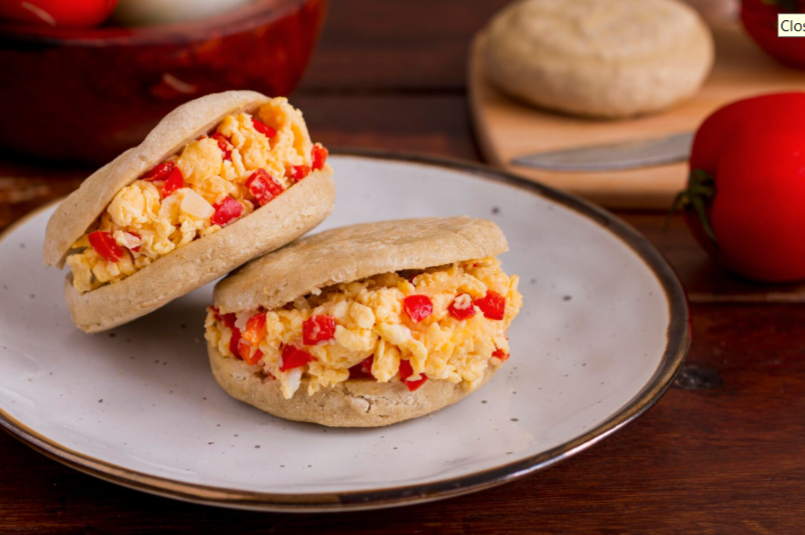
Arepas are one of those foods that people often hear about before they try them, and then wonder why it took them so long once they do. They're the kind of food that shows up at every meal in Venezuela: breakfast, lunch, dinner, and late-night snacks. In Houston, Venezuelan arepas have built a following among both the Venezuelan community and people from all over the city who have discovered them through restaurants, food markets, and home cooking.
What an Arepa Actually Is
An arepa is a round, thick patty made from pre-cooked corn flour (masarepa). The dough is mixed with water and salt, formed by hand, and then cooked on a griddle, in an oven, or in an air fryer. The exterior develops a slight crust, and the interior stays soft and slightly moist. Once cooked, the arepa is typically sliced open and filled.
Venezuelan Arepas vs. Colombian Arepas
Both countries have arepas as a staple, but they're made and eaten differently. Venezuelan arepas are thicker and almost always stuffed with a filling. Colombian arepas are thinner and more often served plain or with toppings rather than filled. In Houston, you'll find both styles, but Venezuelan-style stuffed arepas have become more visible in the city's restaurant and frozen food market.
Classic Fillings for Venezuelan Arepas
Reina Pepiada
Reina Pepiada is one of the most well-known arepa fillings. It's made with shredded chicken mixed with avocado and mayonnaise. The combination is creamy and filling, and the avocado keeps the chicken mixture from being dry. This filling has its own story in Venezuelan food history: it was supposedly created in Caracas in the 1950s and named after a beauty queen.
Pabellón
Pabellón is the Venezuelan national dish: shredded beef, black beans, white rice, and sweet plantains (maduros). When these components go into an arepa, you get a compact version of the full plate. It's a filling that covers multiple flavor profiles at once, with the sweetness of the maduros alongside the savory beef and earthy black beans.
Domino
The Domino filling is simple: black beans and white cheese. It's a combination of black and white, which is where the name comes from. The beans are soft and well-seasoned, and the cheese adds salt and a slight tang. This is a common breakfast filling, but it works at any time of day.
Pernil
Pernil is slow-roasted pork. When used as an arepa filling, it's usually shredded or sliced thin and piled into the open corn pocket. It has a deep, savory flavor that pairs well with the corn base of the arepa. Some versions add avocado or a drizzle of sauce on top.
Where to Find Venezuelan Arepas in Houston
Venezuelan Restaurants
Several Venezuelan restaurants in Houston serve arepas as a central menu item. These are sit-down spots or fast-casual counters where you order your arepa and filling and eat on-site. The arepas are made fresh, cooked to order, and served hot.
The Westheimer corridor and the Galleria area have the highest concentration of Venezuelan restaurants in the city. Spring Branch is another neighborhood where Venezuelan food has taken root, with more neighborhood-style restaurants that tend to be quieter and more community-focused.
Latin American Markets
Some Latin American grocery stores in Houston have small food counters or bakeries that serve fresh arepas. These counters are a good option if you're near a market and want something quick. The arepas here are often plainer and intended as a side or a snack rather than a full meal.
Frozen Arepas for Home Cooking
For people who want to cook arepas at home without making the dough from scratch, frozen arepas are a practical solution. You pull them out of the freezer, cook them in a skillet or air fryer, and then fill them yourself. This gives you full control over the filling and the cooking method.
How to Cook Frozen Arepas
Cooking Methods
Skillet: Heat a small amount of oil over medium heat. Cook the frozen arepa for 5 to 7 minutes per side until a golden crust forms.
Air fryer: Cook at 375 degrees Fahrenheit for 10 to 12 minutes, flipping once halfway through.
Oven: Bake at 375 degrees for 15 to 18 minutes, turning once. This method takes longer but is hands-off.
Once cooked, let the arepa rest for a minute, then slice open from the side and fill.
Making Arepas at Home from Scratch
If you want to go further, making arepas from scratch is not as complicated as it sounds. You need masarepa (pre-cooked corn flour, not masa harina), water, and salt. Mix the flour and salt with warm water until you get a dough that doesn't stick to your hands and holds its shape when you form it into a ball. Then flatten it into a round about an inch thick and cook it on a greased skillet over medium heat.
The key is cooking time. Give each side at least 5 minutes before flipping. The crust needs time to form, and if you flip too early, the dough will stick. You'll know the arepa is close to done when it sounds hollow if you tap it.
Why Venezuelan Arepas Have a Place in Houston's Food Scene
Houston is a city that has always made room for the food traditions of the communities that live here. Venezuelan arepas have followed that same path: starting in Venezuelan households and restaurants, then spreading to markets, food trucks, and frozen food sections. They're now recognizable to a much broader audience in the city than they were a decade ago.
For anyone new to Venezuelan food, arepas are a practical starting point. The base is corn flour, the flavors are accessible, and the fillings range from simple to substantial. You can eat at a Venezuelan restaurant in the Galleria area or cook frozen arepas at home on a Wednesday night, and the food holds its own either way.
Comments (0)